Water Service Line Repair
Repair of the private pipe that carries water from your City meter to your home — the core job most callers need.
Learn more →
24/7 phone line · San Luis Obispo, CA
Leaking, broken or failing water line? WaterFlow Solutions connects San Luis Obispo homeowners and property managers with independent local plumbing professionals who locate and repair damaged water service lines — the buried pipe between your City meter and your home.
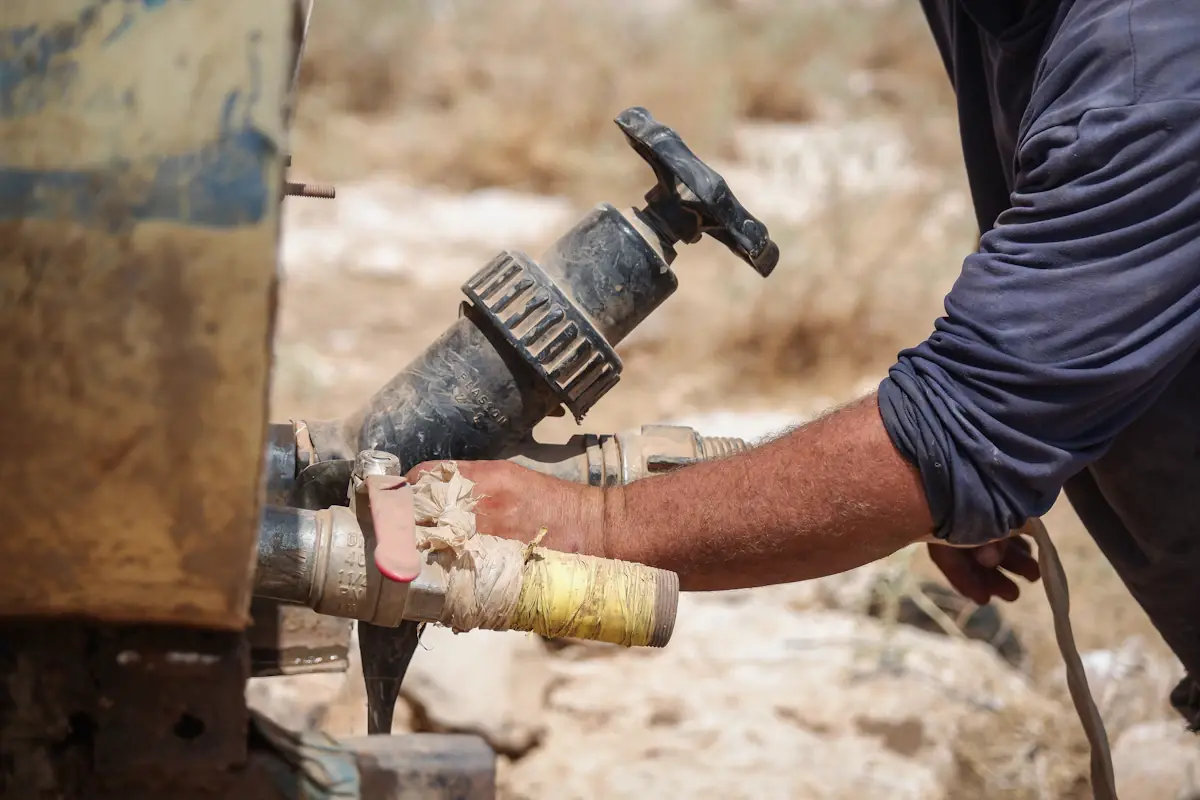
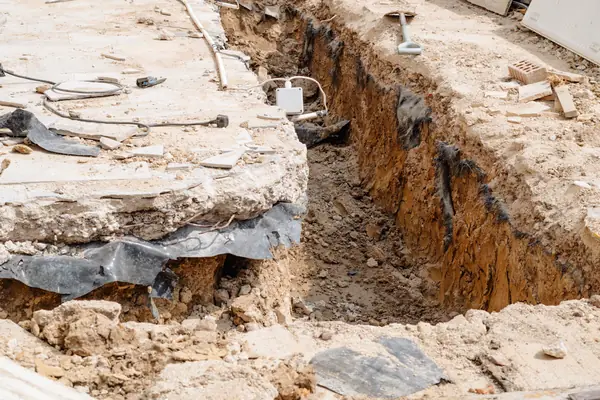
Water line repair fixes leaks, cracks and breaks in the pressurized pipe that supplies your property with drinking water. In San Luis Obispo, that usually means the private service line running underground from the City-owned meter at the sidewalk to your house. A qualified plumber locates the damaged spot, exposes it, replaces the failed section or fitting, pressure-tests the line and restores the ground. Call (805) 285-4654 and we'll connect you with an available local provider.
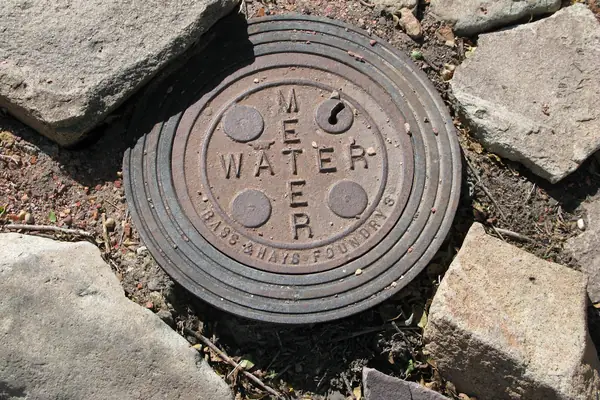
Every property on City water has two pieces of pipe between the street and the kitchen tap. The first belongs to the City: it runs from the water main to the meter box, and San Luis Obispo's Utilities Department operates and maintains it up to and including the meter. The second belongs to you. The city's municipal code calls it the "private service line" — the line that connects the City's meter to the point of entry of your home and, often, your irrigation system.
That private service line is what fails most often, and it's what this site is about. Because it's buried, problems tend to show up indirectly: a wet strip of lawn, a pressure drop, a bill that makes no sense. The work to fix it includes finding the leak without guesswork, deciding whether a spot repair or a section replacement makes sense, getting to the pipe with minimal disruption, and leaving you with a line that holds pressure again.
Depending on what you're dealing with, you'll find more specific guidance on our pages for water service line repair, main water line repair, repairing a buried water line and water line leak repair.
Most water line failures announce themselves in one of these six ways. One sign is worth checking; two or more together usually point to the service line.
A lawn strip, planter or path that stays wet, spongy or unusually green between the meter and the house — especially during a dry spell.
Every fixture loses pressure at once, or pressure fades when two fixtures run. A break in the supply line lets water escape before it reaches you.
A jump in usage you can't explain, or a leak notification from the City's smart-meter customer portal.
The meter's low-flow indicator keeps turning when nothing in the house or yard is using water.
A constant hiss near the meter box, at the hose bib, or where the line enters the house when everything is shut off.
New depressions in the lawn, a settling walkway, or pavement cracking along the route of the line.
Wet ground and a moving meter together are the classic pattern of an underground water line break. A pressure drop with no visible water often means the leak is draining into gravel or soil — a job for professional leak location and repair.
The City of San Luis Obispo publishes a simple way to tell whether a leak is in your service line or inside your house. It takes a couple of minutes and makes your call to a provider far more useful.
Method summarized from the City of San Luis Obispo's Check for a Water Leak guidance. Many San Luis Obispo meters now have smart (AMI) radios, and the City's customer portal lets you set leak notification thresholds.
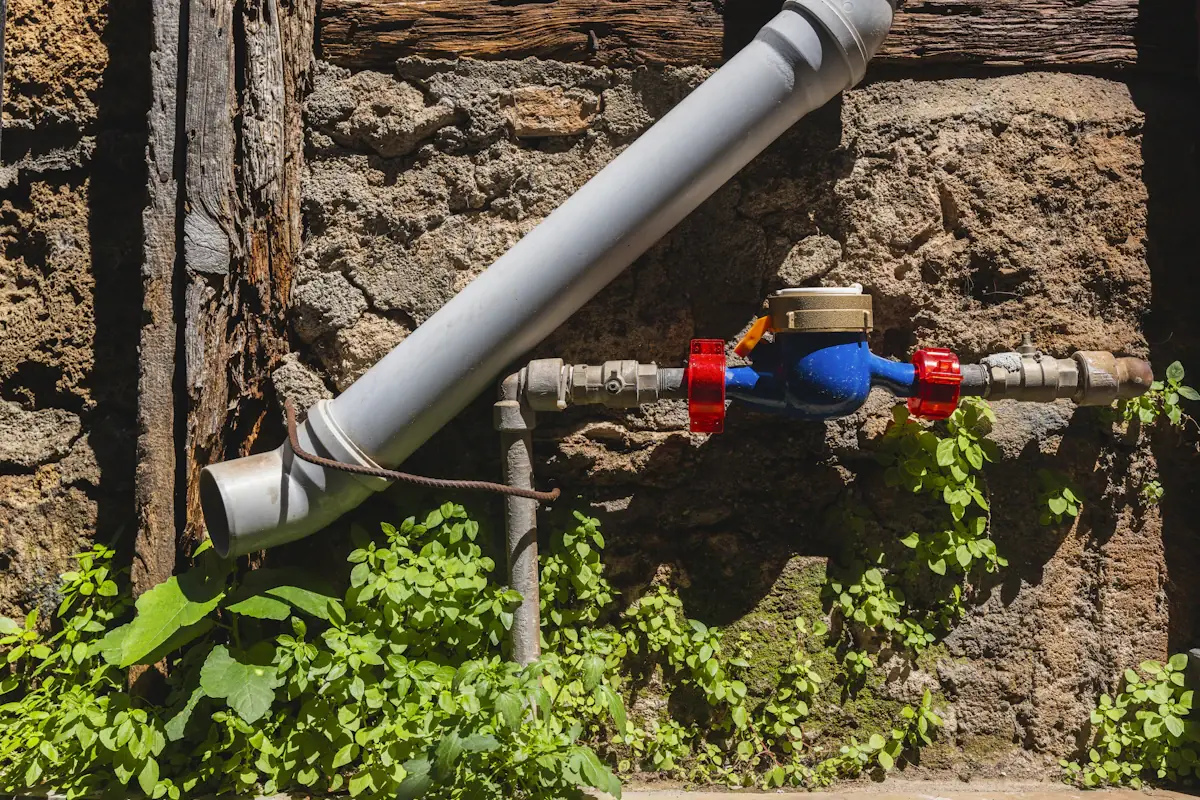
If the meter keeps moving with the building valve closed, you know the problem is on the outside run of pipe. That tells the provider to bring leak-location equipment rather than start opening walls. If you can also say whether your irrigation has its own valve and whether you've shut it, the diagnosis gets faster still.
If water is visibly leaking from the meter box fittings or on the street side of the meter, that part is the City's. Contact the City's Utilities Department before hiring anyone.
Four closely related jobs, each with a different starting point. Pick the one that matches what you're dealing with — or just call and describe it.
Repair of the private pipe that carries water from your City meter to your home — the core job most callers need.
Learn more →Sudden pressure loss or a failed main supply line to the house, including breaks near the foundation or building shut-off.
Learn more →Hidden, buried problems under lawns, planters, walkways and driveways — located first, then accessed with as little digging as possible.
Learn more →A confirmed or suspected leak: meter still spinning, rising bills, wet ground, or the sound of running water.
Learn more →If you're not sure which one applies, start with the symptom. Water where it shouldn't be — pooling, soggy soil, a sinkhole — points toward underground water line repair. Numbers that don't add up — a high bill, a spinning meter, a City leak alert — point toward finding and fixing the leak. A house that has suddenly lost pressure or water altogether is usually a main water line problem. And if an inspector or plumber has already told you the service line is damaged, go straight to service line repair.
Water service lines fail for a handful of reasons, and several of them are especially relevant to the local housing stock and ground conditions.
Much of San Luis Obispo's housing was built well before today's plumbing materials. Galvanized steel supply lines, common in older homes, corrode from the inside and rust through at threads and fittings. Copper lasts longer but can pinhole or crack at joints. Some homes built from the late 1970s to the mid-1990s used polybutylene, which is known for failing at fittings. The age of your neighborhood is a reasonable first clue: older areas such as Downtown and Old Town and the 1960s–70s Laguna Lake tracts are more likely to have original lines than newer developments.
Parts of the San Luis Obispo area sit on soils weathered from the Franciscan mélange around the Morros. Local geologists note that some of these clay minerals are highly expansive — swelling when wet and shrinking and cracking when dry (CNPS San Luis Obispo). Seasonal wet–dry cycles move the ground around a buried pipe, stressing joints and fittings over time.
Roots rarely break into a healthy pressurized line, but they do wrap, lift and crush pipes, and they thrive on water from a small existing leak — which makes the leak worse. Fence posts, sprinkler trenches and landscaping projects also strike service lines more often than most people expect.
Water hammer — the shock when a valve closes suddenly — strains older pipe, and the City specifically cautions that it can be damaging after a leak. Poorly supported pipe, mismatched fittings and dissimilar metals joined without a dielectric union also shorten a line's life.
Whatever the cause, the fix starts with the same step: finding exactly where the line has failed. Our leak repair page explains the location methods providers use.
Methods vary by provider and by site, but a sound repair follows the same sequence: find the leak, open a small access point, replace the damaged section, test it and restore the ground.
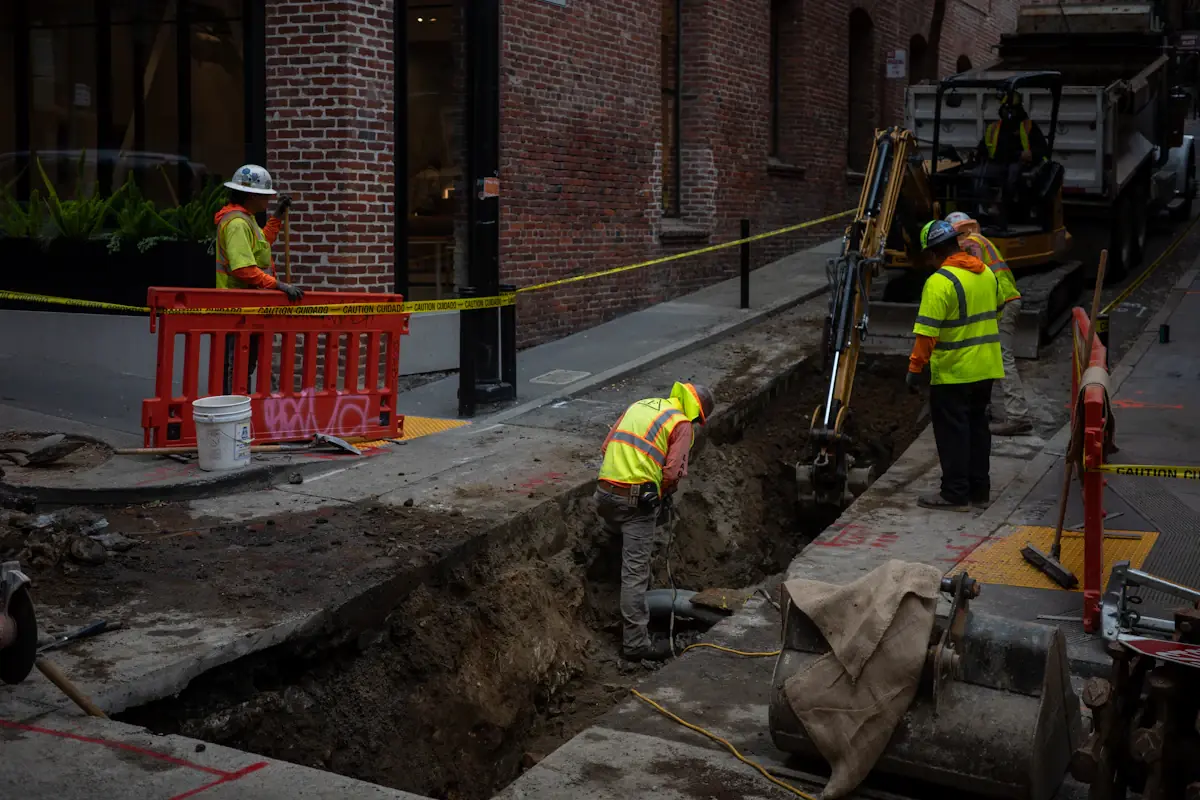
A single failure in an otherwise healthy pipe is a repair. A pipe that is failing everywhere is a replacement, even if only one spot is leaking today. Here's how that decision usually breaks down:
| Situation | Usually points to |
|---|---|
| One leak, pipe in good condition either side | Spot repair of that section |
| Accidental damage (digging, fence post) | Spot repair |
| Second or third leak on the same line | Replacement is worth pricing |
| Heavily corroded galvanized pipe, rusty water | Replacement |
| Polybutylene line failing at fittings | Replacement |
| Pipe too small for the home's needs | Replacement with a larger line |
A good provider will explain what they saw when they exposed the pipe and why they recommend one or the other. If a replacement is recommended, it's reasonable to ask for both prices.
We don't publish prices because we don't set them — each independent provider quotes their own. These are the factors that move a water line repair quote up or down:
WaterFlow Solutions is a referral line, not a plumbing company. Here is exactly how a call works, so there are no surprises.
We route calls to independent plumbing providers who serve San Luis Obispo and handle water line work. We're deliberately careful about what we claim on their behalf: providers differ in experience, equipment and schedule, and we don't attach any single company's reviews, awards or years in business to this website.
What we can tell you is how to check any provider you speak with, whether they came through us or not:
WaterFlow Solutions answers the phone and connects you. The provider diagnoses, quotes, repairs and warranties the work. You decide whether to hire them. Nothing about calling us obligates you to anything. More detail is on our how it works page.
Our phone line serves property owners throughout the City of San Luis Obispo. These neighborhood pages explain what's typical for water lines in each part of town.
Established neighborhoods like Laguna Lake and Downtown and Old Town have older service lines, so we hear more about corrosion and repeat leaks there. Newer specific-plan communities in Edna-Islay and the Orcutt Area and Righetti tend to see problems from settling, irrigation and landscaping work instead. The Foothill and Bishop Peak area has a high share of rentals, where owners often need a leak handled while tenants are in place. Calls from nearby communities outside the city may be connected where a provider is available.
Plain-English answers to the questions San Luis Obispo homeowners ask before they call.
Leaks
A sudden jump in your water bill often means a hidden leak. Here's how to rule out the everyday causes and check whether your water line is to blame.
Read the guide →Leaks
Read your meter's low-flow indicator and use your shut-off valves to tell if a leak is in the house, the irrigation or your water service line.
Read the guide →Repair decisions
When a spot repair makes sense, when replacing the whole water service line is better value, and the questions to ask before you decide.
Read the guide →It depends on which side of the meter the leak is on. The City of San Luis Obispo operates and maintains the pipe from its water main up to and including the water meter, which is usually in the sidewalk in front of the property. Everything after the meter — the private service line running to your home and any irrigation branching off it — is the property owner's responsibility (City of San Luis Obispo). If water is bubbling up in the sidewalk around the meter box itself, contact the City's Utilities Department first.
Use the meter. Turn off the main building shut-off valve, make sure nothing is running, and watch the meter. If it keeps registering flow, the leak is between the meter and the building — in the service line or the irrigation system. If the meter stops, the leak is inside the house. This is the same check the City recommends.
A single leak or break in an otherwise sound pipe can often be repaired by exposing that spot and replacing the damaged section. Replacement becomes the better choice when the pipe is corroded along its length, has failed more than once, or is an outdated material. A provider can tell you which applies after locating the problem. Our water service line repair page covers that decision in detail.
There is no honest single number. Price depends mainly on how easily the leak is found, how deep the line is, what is on top of it (lawn versus a concrete driveway), the length of pipe involved, the pipe material, and whether a permit is needed. The provider you are connected with will give you their own quote before starting work. We do not set or collect provider pricing.
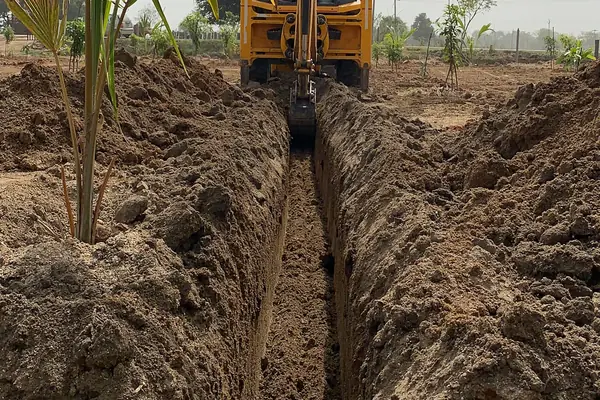
Usually not for a repair. Once the leak is pinpointed with electronic leak-location equipment, a provider can often open a single access hole over the damaged section. Full-length trenching is more common when the entire line is being replaced, and some providers offer trenchless replacement methods where site conditions allow. See underground water line repair for how access is planned.
Shut off the water at your customer valve — it is normally inside the meter box on the side closest to the house — or at the main building shut-off. Do not operate the City's valve on the street side of the meter. Keep people and vehicles off soft or sunken ground, then call a provider.
No. WaterFlow Solutions is a referral service. We answer the phone and connect you with an independent local provider who does water line work. That provider quotes, performs and warranties the job. We don't employ technicians or perform repairs ourselves.
Yes, the line is open around the clock. Whether a provider can come out the same night depends on who is available at that moment, so for after-hours calls we recommend shutting the water off first and then asking the provider about their earliest visit.
According to the City, its lead service line identification project did not locate any City-owned or privately owned service lines made of lead. If you ever find lead pipe on your side, the City asks to be notified (source). Older private lines in the city are more commonly galvanized steel or copper.
Call WaterFlow Solutions and we'll connect you with an independent local provider for water line repair in San Luis Obispo.