
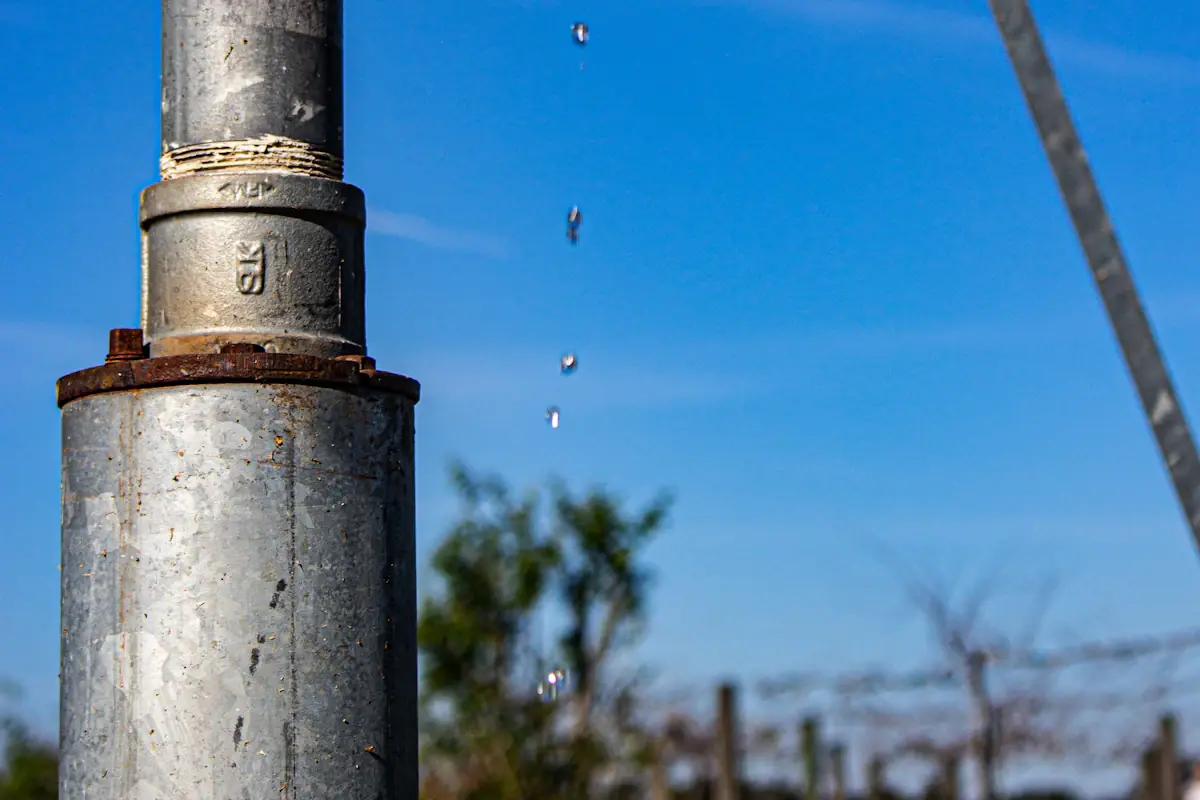
- Age and pipe material are the biggest predictors of failure.
- Shrink-swell clay soils stress buried joints over many seasons.
- Accidental digging damage is common and usually a simple spot repair.
A plumber who exposes a failed pipe can usually tell you why it failed just by looking at it. A pinhole in otherwise bright copper tells a different story from a thread rusted through on galvanized steel, or a clean split in plastic next to a new fence post. Here are the usual suspects.
1. Age
Every material has a working life, and a pipe under constant pressure uses it up steadily. In established neighborhoods, it's common for the service line to be the original one installed when the house was built. The older the house and the less you know about its plumbing history, the more likely age is part of the story.
2. Corrosion
Galvanized steel, common in older homes, corrodes from the inside. Rust builds up, narrows the bore, reduces pressure and eventually eats through, usually at threaded joints where the protective zinc coating was cut. Copper resists corrosion far better but can still develop pinholes, especially where water chemistry or electrical grounding issues play a part.
3. Mixed metals
Where a galvanized pipe is joined directly to copper without an isolating (dielectric) fitting, the two metals react. The joint becomes the weak point, and it's one of the most common leak locations on patched older lines.
4. Soil movement
Parts of the San Luis Obispo area sit on clay-rich soils derived from the Franciscan mélange around the Morros, and some of those clays are highly expansive: they swell when wet and shrink and crack when dry (CNPS San Luis Obispo). Year after year of wet winters and dry summers moves the ground around a buried pipe. Rigid joints and fittings take the strain. Settlement of trench backfill after construction does something similar in newer neighborhoods.
5. Tree roots
Roots don't usually break into a healthy, pressurized water line the way they invade sewer pipes. What they do is grow around a pipe, lift it, press it against rocks and crush it. And once a small leak starts, roots grow toward the water, which makes the damage worse.
6. Pressure surges and high pressure
Water hammer, the shock you sometimes hear when a valve snaps shut, sends a pressure spike through the system. The City of San Luis Obispo notes that water hammer can be damaging to pipes, especially after a leak. Consistently high supply pressure also strains older pipe and fittings; plumbing codes generally call for a pressure-reducing valve where supply pressure exceeds 80 psi.
7. Digging damage
Fence posts, sprinkler trenches, tree planting and patio footings all intersect buried water lines more often than people expect. The damage is often immediate (a burst) but sometimes subtle: a nick that becomes a leak months later. Calling 811 before digging gets public utilities marked, but your private service line usually isn't, so know roughly where it runs before any yard project.
8. Poor installation
Pipe laid on sharp rock, backfilled without bedding, supported badly where it rises to the house, or joined with the wrong fittings will fail early. On older properties you may also find a line that has been patched several times with whatever was at hand.
What about freezing?
In colder climates, freezing is a leading cause of burst pipes. On the Central Coast, hard freezes are uncommon, so it's a much smaller factor here than the causes above, though exposed pipe at the house connection can still be vulnerable on a rare cold night.
Why the cause matters
A pipe damaged by a fence post is usually sound on either side, so a spot repair is the right call. A pipe that's corroding along its length will keep leaking, so replacement may be the better value. When a provider exposes the damage for water service line repair, ask what they think caused it. If the line is buried deep or under hardscape, our underground water line repair page explains how access is planned. You'll find more local context on our San Luis Obispo water line repair overview.